The Three Fundamentals That Will Future-Proof Your Leaders
By Dr. David Livingston
A few years ago, I watched my young son run up and down a small hill in Alexandria, Virginia. With each descent, he pushed himself just a little faster until, on one final run, his little legs couldn’t keep up. He tumbled head over heels.
That image—legs churning, speed building, momentum outrunning capacity—feels like leadership today. AI breakthroughs, geopolitical shifts, economic whiplash. Leaders are sprinting to keep up, knowing a misstep could send everything crashing down. The question is: how do you prepare leaders for an unruly, unpredictable future?
Too many organizations default to hoping the turbulence will pass, but hope is not a strategy. Others adopt a frenetic approach, training their leaders on whatever set of skills or technology is in vogue until the next leadership trend grabs the headlines, leading to disjointed leadership development programs.
If you want leaders who can thrive in complexity, the answer is simplification. You must deliberately build the fundamentals that let them stand strong no matter what the world throws at them.
And those fundamentals are surprisingly simple: Capability. Credibility. Community.
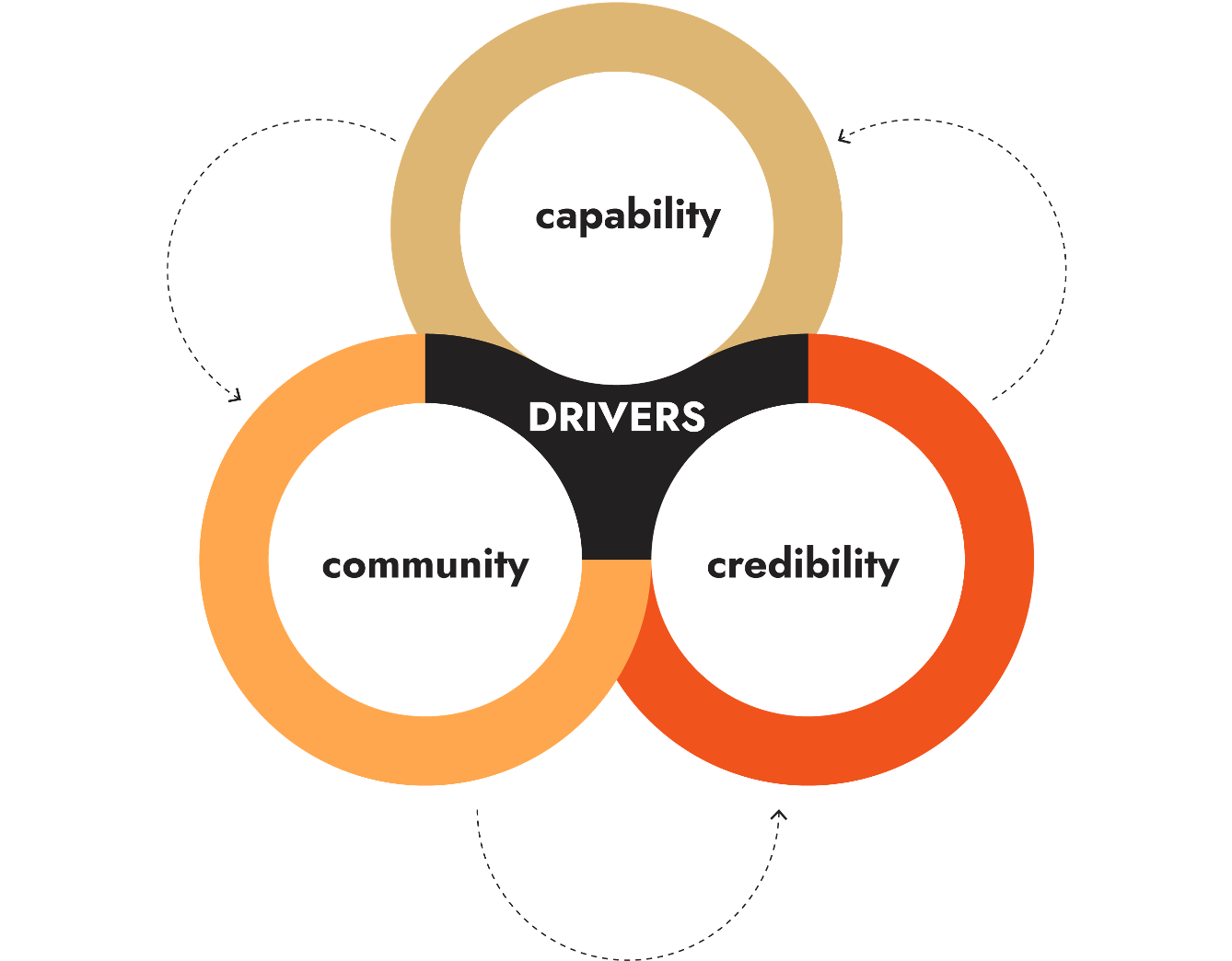
Capability: Can They Do the Work?
A capable leader blends functional know-how, managerial skill, and true leadership. That means:
Functional competence: Enough expertise to understand the work, anticipate issues, and connect it to the bigger picture.
Management discipline: The often maligned but essential ability to prioritize, coordinate, and allocate resources.
Leadership influence: The power to inspire, engage, and sustain resilience in others.
The trap many organizations fall into is assuming capability will “just happen” over time. Yes, experience is a wonderful teacher, but the passive absorption of skills won’t cut it.
DO THIS: Design leader development programs that are experiential, practical, and targeted. Expose leaders to real challenges. Stretch them outside their comfort zone. Focus only on the capabilities that matter most for your organization’s future. And then measure outcomes so you can prove impact—not just activity.
Credibility: Do People Trust Them?
Credibility is the currency of leadership. Without it, leaders can’t influence decisions, secure resources, or earn team commitment. With it, they can move mountains.
But credibility is harder to build than ever. Titles and degrees carry less weight in a world where online personas and AI-polished communications mask real competence. Everyone is skeptical. Every interaction is scrutinized. Leaders don’t get the benefit of the doubt—they must constantly prove they can deliver for their customers, for their stakeholders, and for their people.
DO THIS: Create a rigorous certification process that demonstrates leaders’ behaviors, not just their knowledge. Use simulations, case studies, and live observation to validate capability. A certification signals not only completion but performance. It accelerates credibility, strengthens succession pipelines, and gives others proof that your leaders are the real deal.
Community: Are They Connected?
Leadership is lonely. Power dynamics mean team members rarely speak with full candor. Leaders often face challenges without honest feedback, making decisions in isolation, and the result is stress, anxiety, and poor judgment. The antidote is authentic community, not surface-level social events. Real connection is built through shared purpose, shared experience, and shared language.
DO THIS: Use a cohort model for leader development. Bring cross-functional groups together for immersive growth experiences. Facilitate honest dialogue around real challenges. Create opportunities for reconnection—virtual and in-person—so relationships deepen over time. With the right start, cohorts sustain themselves. Leaders discover they’re not alone, and that sense of belonging makes them stronger, more resilient, and more effective.
The Future Isn’t About Prediction. It’s About Preparation.
The temptation is always to chase the latest skill or tool: coding, data analysis, AI fluency. But technical skills age quickly. What doesn’t expire is the ability to lead with capability, credibility, and community. That’s what separates the organizations that adapt and thrive from those that stumble and fade.
Future-proofing your leaders isn’t about teaching them to predict the next disruption or training them in the latest tech. It’s about equipping them to handle whatever disruption comes. If you build leaders with the right fundamentals, you won’t just keep up—you’ll pull ahead of the competition.
The future will only get faster. The question is whether your leaders will tumble down the hill—or stand tall, steady, and ready for the next challenge.